
by vellorecity | Aug 5, 2026 | Gold News, News
Gold prices in Chennai witnessed a strong rally on Wednesday, August 5, 2026, according to the latest morning rates released by the Madras Jewellers & Diamond Traders Association (MJDTA). Both 22-carat (22K) and 18-carat (18K) gold prices increased by ₹160 per gram, while silver prices rose by ₹5 per gram.
The 22K gold rate climbed from ₹13,200 to ₹13,360 per gram, registering a sharp increase of ₹160. Likewise, the 18K gold rate rose from ₹11,015 to ₹11,175 per gram, also gaining ₹160 per gram.
Meanwhile, the silver price in Chennai increased from ₹235 to ₹240 per gram, recording a ₹5 rise over the previous trading session.
Chennai Gold and Silver Rates Today – August 5, 2026
22K Gold (1 Gram): ₹13,360 (▲ ₹160)
18K Gold (1 Gram): ₹11,175 (▲ ₹160)
Silver (1 Gram): ₹240 (▲ ₹5)
Gold Prices Register Sharp Single-Day Gain
Today`s increase marks a significant jump in Chennai`s bullion market, with 22K and 18K gold recording a ₹160 per gram increase compared to the previous day`s rates. The rise reflects positive sentiment in the global precious metals market and changing domestic demand.
Silver also moved higher, gaining ₹5 per gram to reach ₹240, ending its previous flat trend.
Factors Influencing Gold Prices
Gold and silver prices in Chennai are influenced by several domestic and international factors, including:
– Global bullion market trends
– International gold prices
– US dollar exchange rate movements
– Inflation and interest rate expectations
– Central bank monetary policies
– Geopolitical developments
– Jewellery demand and investment activity
– Import duties and transportation costs
As these factors continue to change, gold prices in Chennai may fluctuate throughout the trading week.
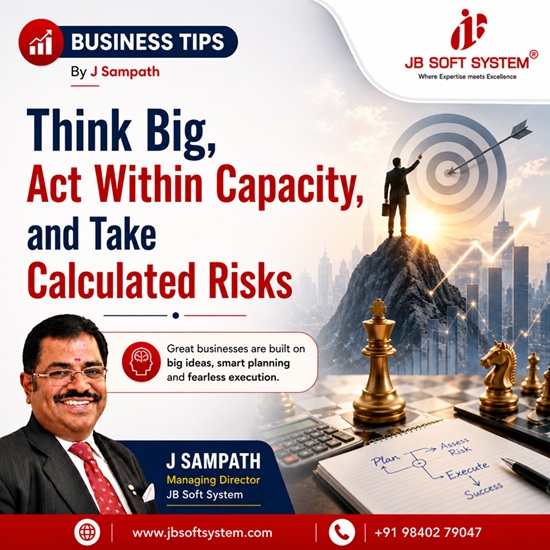
by vellorecity | Aug 4, 2026 | Morning thoughts by j sampath, News
Every successful business begins with a big thought.
A larger vision helps us see possibilities beyond our present situation. It encourages us to explore new markets, build better products, recruit talented people, adopt technology, and create a stronger future.
But thinking big does not mean acting without limits.
A business must grow with capacity, within capacity, and through calculated risk.
Think Big
Thinking big is about expanding the size of your vision.
Do not limit your business only to what it is today. Ask yourself:
Can this product reach more customers?
Can this service be offered in more locations?
Can technology improve our delivery?
Can we build a better team?
Can we create a stronger and more trusted brand?
A small business can have a large vision. The present size of the company need not decide the size of its future.
However, a big vision must be supported by practical action.
Understand Your Capacity
Capacity is not only about money.
Your business capacity includes:
– Financial strength
– Team capability
– Time availability
– Production capacity
– Technology readiness
– Management ability
– Customer service strength
– Market knowledge
– Ability to handle pressure and uncertainty
Before expanding, business owners must clearly understand what they can currently manage.
Taking more orders than your team can deliver may damage customer trust. Opening multiple branches without systems may create confusion. Spending heavily on marketing without a proper sales follow-up process may waste money.
Growth should not weaken the foundation of the business.
Work Within Your Capacity
Working within capacity does not mean remaining small.
It means using available resources wisely.
A business should avoid taking commitments that it cannot fulfil. It should not borrow beyond its repayment ability, recruit more people than it can manage, or accept projects without the required skills and systems.
At the same time, being too cautious can also prevent growth.
The purpose of understanding your capacity is not to restrict yourself. It is to help you choose the right next step.
You may not be able to open ten branches today. But you may be able to open one well-managed branch.
You may not be able to recruit a large sales team immediately. But you may be able to appoint one capable salesperson and build a proper sales process.
You may not be able to automate the entire business at once. But you may begin by implementing a CRM, task-management system, or customer-support process.
Progress happens when we continuously expand our capacity.
Do Not Confuse Capacity With Comfort
Many people say, “This is beyond my capacity,” when it is actually only beyond their comfort zone.
Capacity and comfort are different.
You may have the financial ability, team support, knowledge, and market opportunity, but fear may stop you from moving forward.
Before rejecting g an opportunity, examine it carefully.
Ask:
Is this genuinely beyond our capacity?
Or are we simply afraid of change?
Some opportunities require courage, learning, delegation, and a willingness to move beyond familiar methods.
Growth begins when we stretch our capacity without breaking the organisation.
Take Calculated Risks
Every business decision carries some risk.
Launching a new product has risk.
Recruiting employees has risk.
Entering a new market has risk.
Investing in advertising has risk.
Purchasing machinery has risk.
Developing technology has risk.
Avoiding every risk is impossible. In fact, refusing to take any risk is itself a risk because the market, customer expectations, technology, and competition continue to change.
The answer is not reckless risk. The answer is calculated risk.
A calculated risk is taken after studying the possible benefits, costs, challenges, and alternatives.
Before making a major decision, evaluate:
– How much investment is required?
– What is the possible return?
– What could go wrong?
– How much loss can the business safely absorb?
– Can the idea be tested on a smaller scale?
– What systems and people are required?
– What is the backup plan?
– How long can we wait for results?
Calculated risk is not a guarantee of success. It is a disciplined way of improving the probability of success.
Test Before You Expand
One of the safest ways to think big is to begin small.
Before launching across an entire state, test the product in one city.
Before spending a large advertising budget, run a smaller campaign and measure the response.
Before building complex software, develop a minimum workable version.
Before appointing a large team, test the process with a smaller team.
Before opening multiple branches, make one branch successful and document the operating system.
A pilot project gives valuable information. It helps you understand customer behaviour, operational difficulties, pricing, team performance, and market demand.
Small experiments can support big decisions.
Build Capacity Continuously
The capacity of a business is not fixed.
It can be expanded.
You can increase financial capacity through better cash-flow management.
You can increase team capacity through recruitment, training, delegation, and leadership.
You can increase operational capacity through processes, automation, and technology.
You can increase sales capacity through better lead generation, follow-up systems, CRM tools, and sales training.
You can increase delivery capacity through planning, standardisation, documentation, and quality control.
The right question is not only, “What can we do now?”
The better question is, “What capacity must we build to achieve our vision?”
Protect Cash Flow While Growing
Many businesses appear profitable but struggle because of poor cash flow.
Growth usually reqequires working capital. More customers may mean more inventory, salaries, advertising expenses, infrastructure costs, and delayed payments.
Therefore, expansion must be supported by financial planning.
Monitor your receivables, expenses, margins, debt, repayment commitments, and cash reserves.
Revenue growth without cash-flow discipline can create unnecessary pressure.
Do not invest every available rupee into expansion. Maintain sufficient reserves for regular operations and unexpected situations.
A growing business must remain financially healthy.
Create Systems Before Scale
A business that depends entirely on the owner cannot grow smoothly.
As the business expands, informal instructions and memory-based management become insufficient.
Processes must be documented.
Responsibilities must be assigned.
Performance must be measured.
Customer enquiries must be tracked.
Payments must be followed up.
Projects must be monitored.
Complaints must be recorded and resolved.
Technology and systems help the business handle more work without losing control.
Before increasing the size of the business, strengthen the operating system of the business.
Review and Adjust
Even well-calculated decisions may not always produce the expected result.
That does not mean the decision was completely wrong.
Business owners must regularly review progress, study data, listen to customers, identify mistakes, and adjust the plan.
Do not continue a failing strategy only because money and time have already been invested.
At the same time, do not abandon a good strategy merely because the first results are slow.
Know when to persist, when to improve, and when to stop.
This balance comes from observation, experience, and honest evaluation.
Big Vision, Responsible Execution
Thinking big gives direction.
Capacity gives stability.
Calculated risk creates movement.
Discipline creates sustainable growth.
A business should neither remain small because of fear nor expand recklessly because of ambition.
Dream beyond your present situation. Build the people, processes, technology, finances, and knowledge required to support that dream.
Think big.
Start with what you have.
Work within your capacity.
Keep increasing your capacity.
Take calculated risks.
Measure every step.
And grow with confidence, clarity, and responsibility.
Business growth is not about making the biggest move immediately. It is about making the right move today that prepares the business for a much bigger tomorrow.
– J. Sampath
Business Growth Strategist
About the Author
J. Sampath is the Founder and CEO of JB Soft System, a premier Chennai-based IT consulting and custom software development firm established in 2001. He is widely recognized for his unique philosophies on debt-free business growth, standard operating procedures (SOPs), and values-driven leadedership. He regularly shares his business insights, operational frameworks, and morning reflections to empower the next generation of entrepreneurs.

by vellorecity | Aug 4, 2026 | Health, News
Fast food is convenient and tasty, but eating it regularly can negatively affect both your physical and mental health. Most fast foods are high in calories, saturated fat, salt, sugar, and refined carbohydrates, while providing very little fibre or essential nutrients.
How Fast Food Affects Your Body
1. Heart Health
– High salt intake can increase blood pressure.
– Excess saturated fat may raise cholesterol levels.
– Over time, this can increase the risk of heart disease, heart attack, and stroke.
2. Digestive Health
– Low fibre content can lead to constipation.
– High amounts of processed carbohydrates may cause bloating and digestive discomfort.
3. Weight Gain
– Fast food is often high in calories and less filling due to low fibre.
– Regular consumption can lead to overeating, weight gain, and increased pressure on joints.
4. Blood Sugar & Diabetes Risk
– Refined carbohydrates and added sugars can cause rapid blood sugar spikes.
– Frequent spikes may increase the risk of developing Type 2 diabetes over time.
5. Mood & Energy
– Blood sugar fluctuations can leave you feeling tired, sluggish, and irritable.
– A lack of essential nutrients may also affect overall mood and energy levels.
6. Skin Health
– Excess salt may contribute to dry skin.
– High-fat and high-sugar diets can increase the likelihood of acne and premature skin aging.
Healthy Alternatives
– Eat more fresh fruits and vegetables.
– Choose whole grains instead of refined carbohydrates.
– Include lean protein such as grilled chicken or fish.
– Limit fast food to an occasional treat rather than a daily habit.
Disclaimer
This content is provided for informational purposes only and should not be considered medical advice. For personalized dietary or health guidance, consult a qualified healthcare professional.